Continue reading "Secure cloud storage with encryption technologies and tips"
The post Secure cloud storage with encryption technologies and tips appeared first on USAccess.
]]>
 Cloud storage (CS) has become an indispensable part of our digital lives, allowing us to store and access our files and data from anywhere with an internet connection. However, with the growing concerns about data breaches and privacy, ensuring the security of our information in the cloud has become paramount. This article explores the world of secure cloud storage and highlights the significance of encryption technologies in safeguarding our data. In today’s interconnected world, secure cloud storage refers to the practice of storing data on remote servers accessible over the internet while employing encryption techniques to protect the confidentiality and integrity of the information. Encryption plays a vital role in ensuring that even if unauthorized individuals gain access to the stored data, it remains unreadable and unusable without the appropriate decryption key.
Benefits of Secure Cloud Storage
Data protection and privacy
One of the primary advantages of using secure CS is the enhanced protection it provides for our sensitive data. By employing robust encryption technologies, cloud storage providers make it extremely difficult for hackers or unauthorized individuals to access and decipher our files, ensuring the privacy of our information.
Accessibility and flexibility
Secure cloud storage offers unparalleled accessibility and flexibility. We can access our files from various devices and locations, making collaboration and remote work more seamless. With encryption technologies in place, we can confidently synchronize and share data across multiple devices and platforms, knowing that it remains secure during transit and at rest.
Disaster recovery and data backup
Secure CS also acts as an effective disaster recovery solution. By storing our data in the cloud, we protect it from potential loss due to hardware failures, theft, or natural disasters. With proper encryption and regular backups, we can restore our files easily and ensure business continuity even in challenging circumstances.
Encryption Technologies for Cloud Storage
To achieve robust security in storage, encryption technologies play a pivotal role. Let’s explore some commonly used encryption techniques:
Symmetric encryption
Symmetric encryption employs a single shared key to both encrypt and decrypt data. This method is efficient and fast but requires a secure method to distribute and manage the encryption key.
Asymmetric encryption
Asymmetric encryption, also known as public-key encryption, uses a pair of keys: a public key for encryption and a private key for decryption. This method eliminates the need to share
a single key, making it more secure for communication and data sharing.
Hashing algorithms
Hashing algorithms play a crucial role in secure cloud storage by ensuring data integrity. A hash function takes input data and generates a fixed-length string of characters, known as a hash value or digest. Even a small change in the input data will result in a significantly different hash value, making it easy to detect any tampering or data corruption.
Best Practices for Secure Cloud Storage
While encryption technologies provide a strong foundation for secure cloud storage, it’s essential to follow best practices to maximize data security. Here are some key recommendations:
Strong passwords and multi-factor authentication
Choose strong and unique passwords for your cloud storage accounts, combining uppercase and lowercase letters, numbers, and special characters. Additionally, enable multi-factor authentication (MFA) to add an extra layer of security. MFA requires a secondary authentication method, such as a unique code generated on your smartphone, along with your password.
Regular data backups
Back up your data regularly to ensure you have copies of your files in case of accidental deletion, data corruption, or a security breach. Use the backup features provided by your cloud storage provider or consider using a separate backup service to store copies of your data.
Secure file sharing and collaboration
When sharing files or collaborating with others, choose secure sharing options that require recipients to authenticate themselves before accessing the shared data. Implement granular permissions to control who can view, edit, or download your files, and regularly review and revoke access for individuals who no longer need it.
 Tips for Choosing a Secure Cloud Storage Provider
Selecting a reliable and secure CS provider is crucial to ensuring the safety of your data. Consider the following factors when making your decision:
Reputation and trustworthiness
Research the reputation and track record of the cloud storage provider. Look for reviews, customer testimonials, and any history of data breaches or security incidents. Choose a reputable provider that has a proven commitment to data security and privacy.
Security features and encryption standards
Evaluate the security features offered by the cloud storage provider. Look for end-to-end encryption, where your data is encrypted before it leaves your device and remains encrypted throughout its storage and transmission. Additionally, ensure that the provider implements industry-standard encryption protocols and algorithms.
Compliance with data protection regulations
Check if the cloud storage provider complies with relevant data protection regulations, such as the General Data Protection Regulation (GDPR) or the California Consumer Privacy Act (CCPA). Compliance demonstrates the provider’s commitment to protecting user data and respecting privacy rights.
Common Mistakes to Avoid
When using secure CS, it’s important to be aware of common mistakes that can compromise data security. Here are a few pitfalls to avoid:
Weak passwords and inadequate authentication
Using weak passwords or failing to enable multi-factor authentication leaves your cloud storage account vulnerable to unauthorized access. Choose complex and unique passwords, and take advantage of MFA options whenever available.
Neglecting software updates and patches
Regularly update the software and applications associated with your cloud storage to ensure you have the latest security patches. Outdated software may contain vulnerabilities that hackers can exploit to gain access to your data.
Ignoring data encryption options
Some cloud storage providers offer optional encryption features that allow you to encrypt files and folders before uploading them. Failing to utilize these encryption options leaves your data vulnerable to unauthorized access.
Integrating Encryption Technologies in Cloud Storage Solutions
CS providers are continuously improving their security offerings by integrating encryption technologies. Here are a few encryption techniques commonly employed in cloud storage solutions:
End-to-end encryption
End-to-end encryption ensures that data is encrypted on the user’s device before it is uploaded to the cloud and remains encrypted until it is decrypted on the recipient’s device. This means that even the cloud storage provider cannot access the contents of the files.
Zero-knowledge encryption
Zero-knowledge encryption, also known as client-side encryption, enables users to encrypt and decrypt their files locally before they are uploaded to the cloud. The encryption keys are only known to the user, ensuring that only they have access to the decrypted data.
Client-side encryption
Client-side encryption involves encrypting files on the user’s device before uploading them to the cloud. The encryption keys are securely stored and managed by the user, providing an additional layer of security.
By incorporating these encryption technologies into their cloud storage solutions, providers can offer enhanced data protection and give users greater control over their information.
Conclusion
Secure CS with encryption technologies is essential for safeguarding sensitive data in an increasingly interconnected world. By implementing encryption methods such as symmetric and asymmetric encryption, along with hashing algorithms, cloud storage providers can ensure the confidentiality and integrity of user data. Adhering to best practices, such as using strong passwords, regular backups, and secure file sharing, further enhances data security. When selecting a cloud storage provider, it’s important to consider factors such as reputation, security features, and compliance with data protection regulations. By taking these measures, individuals and businesses can enjoy the benefits of cloud storage while maintaining the highest level of data security.
Take the Next Step! Please call 866.421.9522 to schedule a meeting with one of our industry experts.
The post Secure cloud storage with encryption technologies and tips appeared first on USAccess.
]]>Continue reading "Cloud Encryption Tools and Industry Best Practices"
The post Cloud Encryption Tools and Industry Best Practices appeared first on USAccess.
]]>
In today’s digital landscape, where data breaches and cyber threats are on the rise, organizations are increasingly turning to cloud encryption as a vital security measure. Cloud encryption (CE) tools provide a robust defense mechanism against unauthorized access and ensure the confidentiality, integrity, and availability of data stored in the cloud. This article explores the concept of encryption, its importance, and industry best practices for implementing effective encryption strategies.
Understanding Cloud Encryption
CE is the process of converting sensitive data into ciphertext before storing it in the cloud. It involves using encryption algorithms and cryptographic keys to scramble the data, making it unreadable without the corresponding decryption keys. This ensures that even if the data is intercepted or compromised, it remains secure and inaccessible to unauthorized parties.
Importance of Cloud Encryption
-
-
Safeguarding Confidentiality: CE protects sensitive information, such as customer data, intellectual property, and financial records, from unauthorized access. It ensures that only authorized users with the decryption keys can access and decipher the data.
-
Enhancing Data Integrity: Encryption helps maintain data integrity by detecting any unauthorized modifications or tampering attempts. If the encrypted data is altered without proper authorization, the decryption process will fail, indicating potential tampering.
-
Meeting Compliance Requirements: Many industries have strict regulatory requirements concerning data security and privacy. Implementing cloud encryption helps organizations meet these compliance standards and avoid costly penalties.
- Mitigating Insider Threats: Cloud encryption provides an additional layer of security against insider threats. Even if an authorized user turns rogue or their credentials are compromised, the encrypted data remains protected.
-
Industry Best Practices for Cloud Encryption
Encryption Algorithms and Key Management
Choosing strong encryption algorithms is essential for effective cloud encryption. Industry-standard algorithms like AES (Advanced Encryption Standard) or RSA (Rivest-Shamir-Adleman) are widely recommended. Additionally, proper key management practices, including secure key storage, rotation, and revocation, are crucial to ensure the long-term security of encrypted data.
Data Segregation and Access Control
Organizations should segregate data based on its sensitivity and implement access controls accordingly. By employing granular access permissions, they can restrict data access to only authorized individuals or roles, minimizing the risk of unauthorized data exposure.
Secure Data Transmission
Encrypting data during transit is equally important as securing it at rest. Employing protocols such as SSL/TLS (Secure Sockets Layer/Transport Layer Security) ensures that data transmitted between the client and the cloud service provider remains confidential and protected from interception.
Multi-Factor Authentication
Implementing multi-factor authentication (MFA) adds an extra layer of security to CE. By requiring users to provide multiple forms of identification, such as passwords, biometrics, or hardware tokens, organizations can prevent unauthorized access even if a password is compromised.
Regular Security Audits
Conducting regular security audits and vulnerability assessments helps identify potential weaknesses in CE implementations. By regularly testing the system’s security posture, organizations can proactively address any vulnerabilities and ensure their encryption practices remain robust.
Compliance and Regulatory Considerations
Compliance with industry regulations and data protection laws is crucial when implementing cloud encryption. Organizations need to understand the specific requirements of their industry and ensure their encryption practices align with applicable standards such as GDPR (General Data Protection Regulation) or HIPAA (Health Insurance Portability and Accountability Act).
Cloud Encryption Tools and Solutions
Various cloud encryption tools and solutions are available to help organizations secure their data in the cloud. These tools offer features such as encryption key management, secure data storage, and seamless integration with popular cloud service providers. Some notable cloud encryption solutions include:
-
-
AWS Key Management Service (KMS): Amazon Web Services (AWS) offers a fully managed service for creating and controlling encryption keys. AWS KMS integrates with other AWS services, providing a seamless encryption experience for data stored in AWS.
-
Microsoft Azure Key Vault: Azure Key Vault is a cloud-based service that safeguards cryptographic keys and secrets. It enables organizations to securely store and manage encryption keys used for data encryption within the Azure ecosystem.
-
Google Cloud Key Management Service (KMS): Google Cloud KMS offers a centralized key management solution for encrypting and decrypting data in the Google Cloud Platform. It supports various encryption algorithms and provides robust access controls.
-
VeraCrypt: VeraCrypt is an open-source disk encryption software that allows users to create encrypted virtual drives or encrypt entire storage devices. It offers robust encryption algorithms and is compatible with multiple operating systems.
- Fortanix: Fortanix provides a cloud-native encryption platform offering secure key management, tokenization, and enclave technologies. It enables organizations to protect data across cloud environments, ensuring end-to-end encryption.
-
Future Trends in Cloud Encryption
The field of CE is continuously evolving to address emerging threats and technologies. Some future trends to watch for include:
-
-
Homomorphic Encryption: Homomorphic encryption allows computations to be performed directly on encrypted data, enabling the secure processing of sensitive information in the cloud without decryption.
-
Quantum-Safe Encryption: With the rise of quantum computing, the need for quantum-resistant encryption algorithms is becoming crucial. Future cloud encryption solutions will focus on implementing quantum-safe encryption algorithms to ensure long-term security.
-
Zero-Trust Encryption: Zero-trust architecture is gaining popularity, and future cloud encryption solutions will likely incorporate zero-trust principles. This approach assumes that no user or system should be inherently trusted, and access to data is granted based on continuous verification and authentication.
-
Intelligent Key Management: Advances in artificial intelligence and machine learning will contribute to more intelligent and automated key management processes. This includes key rotation, revocation, and adaptive encryption strategies based on real-time threat intelligence
-
Container-Level Encryption: As containerization technologies such as Docker and Kubernetes gain traction, encryption at the container level will become more prevalent. Container-level encryption provides an additional layer of security, protecting data even in multi-tenant cloud environments.
-
Conclusion
In conclusion, cloud encryption tools and industry best practices are vital for organizations to protect their sensitive data stored in the cloud. By implementing robust encryption algorithms, managing encryption keys effectively, and following industry best practices, organizations can ensure the confidentiality, integrity, and availability of their data. It is crucial to select the right cloud encryption solution that aligns with specific requirements and industry regulations. As the field of cloud encryption continues to evolve, staying updated on emerging trends and technologies will be essential to maintain a robust and future-proof encryption strategy.
Take the Next Step! Please call 866.421.9522 to schedule a meeting with one of our industry experts.
The post Cloud Encryption Tools and Industry Best Practices appeared first on USAccess.
]]>The post Less than 0.5% of Recorded CVEs Targeted by Cybercriminals, Highlights Prioritization Imperative appeared first on USAccess.
]]>
 As per the findings presented by the Cybersecurity and Infrastructure Security Agency (CISA) and the National Vulnerability Database (NVD), an intriguing fact comes to light. Among the vast array of 215,180 Common Vulnerabilities and Exposures (CVE) recorded in the NVD, a meager 933 CVE are presently subject to active exploitation. This revelation accentuates the focused tactics employed by cybercriminals, who are honing in on these specific vulnerabilities to orchestrate attacks and breach systems. Essentially, less than 0.5% of the total cataloged CVE are currently targeted for exploitation.
https://www.cisa.gov/known-exploited-vulnerabilities-catalog
For those seeking to fortify their defense strategies, these statistics provided by CISA and the NVD serve as a resounding wake-up call. It emphasizes the criticality of identifying and prioritizing vulnerabilities in order to effectively allocate resources. Addressing the vulnerabilities currently under active exploitation should be of paramount importance to organizations. Implementing timely patching, bolstering security controls, and maintaining vigilant monitoring of network activities are invaluable measures that can mitigate risks and enhance overall cybersecurity resilience.
It is crucial to keep in mind that the question at hand is not whether an attack will occur, but rather when it will transpire. Consequently, staying updated on the latest security patches and investing in continuous monitoring and threat intelligence are imperative practices to safeguard systems and protect valuable data. By adopting a proactive and comprehensive approach to cybersecurity, organizations can effectively mitigate threats and minimize potential impacts.
Do you need cyber security help? Take the Next Step! Please call 866.421.9522 to schedule a meeting with one of our industry experts.
The post Less than 0.5% of Recorded CVEs Targeted by Cybercriminals, Highlights Prioritization Imperative appeared first on USAccess.
]]>Continue reading "7 Ways UCaaS AI Improves Customer Experience"
The post 7 Ways UCaaS AI Improves Customer Experience appeared first on USAccess.
]]>
 As businesses strive to improve customer experience and boost worker productivity, they are increasingly turning to AI to help achieve these objectives. One area where AI is making a significant impact is in Unified Communications as a Service Platforms (UCaaS). UCaaS platforms are now utilizing AI to transform conversations into something that can be seen, used, understood, remembered, and learned from. Here are seven examples of how UCaaS AI is being used:
- Real-time call transcriptions: AI-powered transcription services can convert spoken words into text in real time, allowing users to read and follow along with the conversation as it unfolds.
- Keyword searchable call database: By transcribing calls and making the text searchable, companies can easily locate important information discussed in previous conversations.
- O365/Teams and Salesforce integrations: Integrating UCaaS platforms with popular software such as O365/Teams and Salesforce can provide a more streamlined communication process, allowing for more efficient collaboration.
- Speech recognition: Voice-powered AI can be used to recognize and interpret the speaker’s voice and translate it into text, making it easier to follow and understand the conversation.
- Machine learning: UCaaS platforms can use machine learning algorithms to analyze data and identify patterns, allowing for more effective communication and decision-making.
- 1-touch office to mobile phone call transfer: With the ability to quickly and easily transfer calls from the office to a mobile phone, employees can stay connected while on the go.
- Live call statistics: By providing real-time information on call metrics, UCaaS platforms can help managers monitor performance, identify areas for improvement, and make more informed decisions.
- Real-time call transcriptions: AI-powered transcription services can convert spoken words into text in real time, allowing users to read and follow along with the conversation as it unfolds.
These are just a few examples of the many ways in which UCaaS AI can benefit businesses. By leveraging the power of AI, companies can improve communication, collaboration, and productivity, ultimately leading to better customer experiences and increased revenue.
If your company is looking for ways to enhance its communication processes, it may be worth considering UCaaS AI solutions. With the help of AI, your business can stay ahead of the curve and achieve its goals more efficiently than ever before.
Does your company need a UCaaS AI solution? Take the Next Step! Please call 866.421.9522 to schedule a meeting with one of our industry experts.
The post 7 Ways UCaaS AI Improves Customer Experience appeared first on USAccess.
]]>Continue reading "Internet of Behaviors"
The post Internet of Behaviors appeared first on USAccess.
]]>
The Internet of Things (IoT) has revolutionized the way we interact with technology, from smart homes to wearable devices. But what happens when we combine IoT with another buzzword in the tech industry: behavioral tracking? The result is the Internet of Behaviors (IoB), a system that uses data collected from our behavior to personalize experiences, improve business operations, and impact society as a whole. 
Here are the top 17 characteristics of IoB, categorized into 5 groups:
1. Business Insights and Analytics:
- Improved customer insights: IoB allows businesses to gain deeper insights into customer behavior and preferences, enabling them to make more informed decisions about their products and services.
- Real-time insights: IoB generates real-time data, providing businesses with up-to-date information about customer behavior and market trends.
- Predictive analytics: IoB can use machine learning and artificial intelligence to analyze data and make predictions about future behavior, helping businesses make strategic decisions.
2. Personalization and Advertising:
- Personalization: IoB allows for personalized experiences, such as customized recommendations and tailored content, which can improve customer satisfaction and loyalty.
- Targeted advertising: IoB enables more targeted advertising by using customer data to identify and reach specific audiences, resulting in more effective marketing campaigns.
3. Security and Risk Management:
- Enhanced security: IoB can improve security by providing real-time threat detection and response, as well as enhancing authentication and access controls.
- Risk management: IoB can help identify and manage risks by monitoring and analyzing data related to safety, security, and compliance.
4. Social Impact:
- Smart homes and cities: IoB can create smarter homes and cities by using data to optimize energy use, improve traffic flow, and enhance public services.
- Enhanced education: IoB can improve education by providing personalized learning experiences, monitoring student progress, and enabling remote learning.
- Environmental monitoring: IoB can monitor environmental factors such as air quality, water usage, and waste management, leading to more sustainable practices.
- Financial monitoring: IoB can help individuals and businesses monitor their finances, enabling better financial planning and management.
- Improved public safety: IoB can enhance public safety by monitoring for potential threats and enabling faster response times.
- Behavioral interventions: IoB can help individuals make positive changes to their behavior, such as improving health habits or reducing energy consumption.
5. Challenges and Infrastructure:
- Ethical concerns: As IoB continues to evolve, it is important to address ethical concerns related to privacy, data ownership, and algorithm bias.
- Regulatory challenges: IoB will need to navigate various regulatory challenges related to data protection, cybersecurity, and compliance with existing laws.
- Technology infrastructure: IoB relies on a complex infrastructure of sensors, networks, and computing systems, which must be properly designed and maintained.
- Artificial intelligence: IoB relies heavily on AI and machine learning algorithms to process and analyze data, which requires careful development and oversight to ensure fairness and accuracy.
Summary and Conclusion:
While the Internet of Behaviors has the potential to revolutionize the way we interact with technology and improve society as a whole, it is not without its challenges. Ethical concerns regarding privacy and data ownership and regulatory challenges related to data protection and cybersecurity must be addressed. The development of Internet of Behaviors infrastructure and AI algorithms must also be carefully monitored to ensure accuracy and fairness.
However, the benefits of the Internet of Behaviors cannot be ignored. Improved customer insights and real-time data can enable businesses to make more informed decisions and improve customer satisfaction, while targeted advertising can lead to more effective marketing campaigns. Internet of Behaviors can also lead to smarter homes and cities, better education and financial monitoring, and enhanced public safety.
In conclusion, Internet of Behaviors has the potential to revolutionize the way we understand and interact with the world around us. Its impact on society and business will be profound, offering new opportunities for innovation and growth, but also raising significant ethical and regulatory challenges that must be addressed. As Internet of Behaviors continues to evolve, it will be important to balance the benefits of data-driven insights with the need to protect individual privacy and security.
Take the Next Step! Please call 866.421.9522 to schedule a meeting with one of our industry experts.
The post Internet of Behaviors appeared first on USAccess.
]]>Continue reading "7 Business Challenges to AI Implementation in 2023"
The post 7 Business Challenges to AI Implementation in 2023 appeared first on USAccess.
]]>
Artificial Intelligence (AI) has become a popular buzzword in the business world, with the promise of revolutionizing operations and enhancing performance. However, despite the numerous advantages of Artificial Intelligence, its implementation in the workplace presents significant challenges. In this article, we will discuss the top seven challenges to implementing AI in the business workplace in 2023 and explore ways to overcome them.

Challenge 1: Insufficient or Low-Quality Data AI systems operate by being trained on relevant data, but businesses often struggle to provide the right quality or volume of data necessary for their AI algorithms. This imbalance can lead to discrepant or discriminatory results when operating the Artificial Intelligence system. To prevent this bias problem, it is crucial to use representative and high-quality data. Starting with simpler algorithms that can be easily controlled for bias and modified accordingly can also help.
Challenge 2: Outdated Infrastructure for Artificial Intelligence systems to give the expected results, they need to process large amounts of information in fractions of a second. However, many businesses still use outdated equipment that is not capable of taking on the challenge of this implementation. To overcome this challenge, businesses must be prepared to invest in technologically advanced infrastructure, tools, and applications.
Challenge 3: Integration into Existing Systems Incorporating AI into existing systems is more than just downloading a few plugins. Businesses must consider whether they have the storage, processors, and infrastructure necessary for the system to function properly. Additionally, employees must be trained to use their new tools, troubleshoot simple problems, and recognize when the algorithm is underperforming. Collaborating with a provider who has the necessary AI experience and expertise can help businesses overcome these issues and ensure a smooth transition to machine learning.
Challenge 4: Lack of Talent Finding people with the necessary knowledge and skills to work with AI is a considerable challenge, as the concept of Artificial Intelligence in learning and education is still relatively new. Lack of internal knowledge often keeps many businesses from trying their hand at AI. Training employees on AI development and implementation, hiring AI talent, and licensing capabilities from other IT companies are ways to overcome this challenge.
Challenge 5: Overestimating Your System AI relies on the data it is given, and if that data is not correct, neither will the decisions it makes. The process of learning is complex, especially when trying to formulate it into a set of data we can import into a system. Therefore, it is crucial to properly evaluate and test an Artificial Intelligence system to ensure that it is making accurate decisions.
Challenge 6: Cost Requirements Developing, implementing, and integrating Artificial Intelligence into a business’s strategy is not cheap. Collaboration with experts, launching an ongoing Intelligence training program for employees, and updating IT equipment to handle machine learning tools are necessary expenses. However, businesses can minimize costs by looking into budget-friendly training programs or free applications.
Challenge 7: Legal and Ethical Concerns Legal and ethical concerns are also significant challenges to implementing AI. Data protection laws can impact the data needed for Artificial Intelligence systems, and there are many talks in place to set regulations to ensure transparency and security. Businesses must ensure that they are following legal and ethical guidelines to avoid any legal issues.
In conclusion, implementing AI in the workplace presents numerous challenges that businesses must overcome to fully appreciate its advantages. Addressing these challenges requires collaboration with AI experts, investing in infrastructure, and training employees. Although the implementation of AI requires a significant investment, the benefits it offers far outweigh the challenges. As more research is conducted on AI, the mystery surrounding it will slowly dissolve, making it easier to incorporate it into the workplace.
Is your company exploring AI Communications solutions? Take the Next Step! Please call 866.421.9522 to schedule a meeting with one of our industry experts.
The post 7 Business Challenges to AI Implementation in 2023 appeared first on USAccess.
]]>Continue reading "10 Reasons to Prioritize Network Security, Performance, and Monitoring with NaaS"
The post 10 Reasons to Prioritize Network Security, Performance, and Monitoring with NaaS appeared first on USAccess.
]]>

In today’s interconnected world, network security, performance, and monitoring are critical for the smooth functioning of businesses. Many organizations are turning to Network as a Service (NaaS) providers to effectively manage these functions. This article highlights the top 10 areas to prioritize network security, performance, and monitoring with NaaS and explores the advantages of outsourcing network services to a NaaS provider.
-
- 1. Expertise and Specialized Knowledge: These providers possess extensive expertise and specialized network management and security knowledge. They stay updated with the latest industry trends, ensuring businesses benefit from the best practices and the most advanced solutions.
- 2. Enhanced Security Measures: NaaS providers offer robust security measures to protect networks against cyber threats. They implement state-of-the-art firewalls, intrusion detection systems, and encryption protocols to safeguard data and prevent unauthorized access.
- 3. Proactive Network Monitoring: NaaS providers employ advanced monitoring tools and techniques to proactively detect and address network issues. This proactive approach helps prevent downtime, optimize performance, and ensure uninterrupted operations.
- 4. Scalability and Flexibility: This allows businesses to scale their network infrastructure seamlessly as their needs evolve. Whether expanding or contracting, organizations can easily adjust their network resources without the burden of managing physical hardware.
- 5. Cost Efficiency: Outsourcing network services to a NaaS provider eliminates the need for upfront investments in network equipment and ongoing maintenance costs. This cost-effective approach reduces capital expenses and operational overheads.
- 6. Network Performance Optimization: NaaS providers employ optimization techniques to enhance network performance, ensuring fast and reliable connectivity. They have the infrastructure and resources to prioritize traffic, minimize latency, and optimize bandwidth usage.
- 7. Continuous Updates and Upgrades: NaaS providers are responsible for keeping network equipment and software up to date. They regularly apply security patches, firmware updates, and performance optimizations, relieving businesses of this time-consuming task.
- 8. Redundancy and Disaster Recovery: NaaS providers often have redundant infrastructure and disaster recovery measures in place. This ensures high availability and minimizes the risk of network outages, data loss, and service disruptions.
- 9. Simplified Network Management: Businesses can simplify network management by outsourcing network services to a NaaS provider. They can rely on the provider’s expertise to handle configuration, troubleshooting, and routine maintenance, freeing up internal resources.
- 10. Focus on Core Business Objectives: By offloading network management to a NaaS provider, organizations can redirect their focus and resources towards core business objectives. This allows them to concentrate on strategic initiatives, innovation, and delivering value to their customers.
Conclusion
Prioritizing network security, performance, and monitoring is crucial for the success and stability of businesses. By embracing Network as a Service (NaaS), organizations can tap into specialized expertise, robust security measures, proactive monitoring, scalability, and cost efficiency. Outsourcing network services streamlines operations boosts network performance, and allows businesses to focus on their core competencies. As interconnected systems become increasingly vital, adopting NaaS for network security, performance, and monitoring emerges as an essential strategy for achieving business success.
Does your company need a NaaS solution? Take the Next Step! Please call 866.421.9522 to schedule a meeting with one of our industry experts.
The post 10 Reasons to Prioritize Network Security, Performance, and Monitoring with NaaS appeared first on USAccess.
]]>The post Migrating from POTS Copper to Digital Services: Unlocking Advantages and Eliminating Disadvantages appeared first on USAccess.
]]>
In today’s rapidly evolving business landscape, the reliance on traditional Plain Old Telephone Service (POTS) copper lines has become a hindrance to efficiency and cost-effectiveness. POTS lines have many uses and are used for connecting voice calls, fax machines, elevators, credit card processing, and serving rural areas where broadband has not been readily available. As businesses strive for streamlined communications, migrating to digital platforms has emerged as a compelling solution. This article will explore ten benefits of adopting digital services, including the option for wireless failover services in the event of interruption of the primary internet circuit.
What’s more, we will explore the disadvantages of continuing with POTS, such as increasing rates, installation delays, service unavailability, deteriorating infrastructure, and slow repair times. This article is tailored to business owners, IT professionals, and telephone managers seeking to optimize their communication infrastructure.
Ten Benefits of Adopting Digital Services:
- 1. Enhanced Scalability and Flexibility: Digital services offer unparalleled scalability and flexibility, enabling businesses to effortlessly scale their communication infrastructure as their needs evolve. With features like virtual phone numbers and cloud-based solutions, businesses can expand their reach and adapt their phone systems to match growth or changes in their organization.
- 2. Cost Efficiency: Digital platforms often provide more cost-effective alternatives to POTS. By leveraging Voice over Internet Protocol (VoIP) technology, businesses can significantly reduce long-distance and international call charges. Additionally, the elimination of copper lines and associated maintenance costs further contributes to cost savings.
- 3. Advanced Features and Functionality: Digital services offer an extensive array of advanced features and functionality that surpass the capabilities of traditional POTS systems. These include call forwarding, call routing, voicemail transcription, auto-attendants, and integration with other business applications. These features enhance productivity, collaboration, and customer service.
- 4. Seamless Integration with Existing Infrastructure: Transitioning to a digital platform allows for seamless integration with existing infrastructure, such as customer relationship management (CRM) software, email clients, and collaboration tools. This integration streamlines workflows and ensures a cohesive communication ecosystem.
- 5. Increased Mobility and Remote Work Support: Digital services empower businesses to enable mobility and remote work seamlessly. Through mobile apps and softphone applications, employees can make and receive calls from anywhere, promoting productivity and flexibility.
- 6. Reliability and Redundancy: Digital platforms offer built-in redundancy options, such as wireless failover services. This ensures uninterrupted communication, even in the event of power outages or internet service disruptions. Businesses can maintain their operations and uphold customer satisfaction during challenging situations.
- 7. Rapid Deployment and Scalable Growth: Implementing digital services is generally faster than installing traditional POTS lines. The simplicity of provisioning and the absence of physical infrastructure requirements accelerate the deployment process. This agility enables businesses to quickly adapt to changing communication needs.
- 8. Superior Call Quality: With advancements in internet connectivity and VoIP technology, digital services now provide exceptional call quality, rivaling or even surpassing that of traditional POTS lines. Crystal-clear audio ensures seamless conversations and professional customer interactions.
- 9. Eco-Friendly Solution: Digital services contribute to environmental sustainability by reducing the need for physical infrastructure, such as copper lines and associated manufacturing. By embracing digital communication, businesses can make a positive impact on the environment.
- 10. Future-Proof Communication: Digital platforms offer a future-proof solution as they continue to evolve and integrate emerging technologies. Businesses can leverage advancements in artificial intelligence, analytics, and automation to gain a competitive edge and stay ahead in the ever-evolving communication landscape.
Ten Disadvantages of Staying with POTS:
- 1. Recent Significant Rate Increases: POTS services have experienced substantial rate increases, causing financial strain for businesses relying on traditional phone lines.
- 2. Time to Install: Installing POTS lines can be a time-consuming process, leading to delays in establishing communication infrastructure for new offices or expanding businesses.
- 3. Service Unavailability: POTS services can suffer from service outages and disruptions, resulting in business downtime and lost opportunities for customer engagement.
- 4. Aging Copper Infrastructure: POTS relies on aging copper infrastructure, which is prone to degradation and requires constant maintenance. This can lead to frequent service disruptions and the need for costly repairs.
- 5. Slow Time to Repair: Repairing POTS lines often involves lengthy response times, further prolonging communication downtime and negatively impacting business operations.
- 6. Limited Features and Functionality: Traditional POTS lines offer limited features and functionality compared to digital services. This can hinder businesses from leveraging advanced call management features and integrations with other essential business applications.
- 7. Lack of Mobility and Remote Work Support: POTS lines lack the mobility and remote work support necessary for today’s flexible work environments. Employees are tethered to physical phone lines, limiting their productivity and ability to work from anywhere.
- 8. Inflexibility for Scalable Growth: POTS lines are not easily scalable, requiring significant investments and infrastructure changes to accommodate business growth or fluctuations in communication needs.
- 9. Inefficient Call Routing and Management: POTS systems often lack efficient call routing and management capabilities, leading to missed calls, longer wait times, and decreased customer satisfaction.
- 10. Incompatibility with Modern Communication Technologies: POTS lines struggle to integrate with modern communication technologies, such as unified communications platforms, video conferencing, and instant messaging. This limits businesses’ ability to leverage these technologies for enhanced collaboration and productivity.
Conclusion
Migrating from traditional POTS copper lines to digital services brings a multitude of advantages and benefits for businesses, including scalability, cost efficiency, advanced features, mobility support, and reliable communication options. Conversely, staying with POTS exposes businesses to disadvantages like rising rates, installation delays, service unavailability, aging infrastructure, and limited functionality. By embracing the digital revolution, businesses can optimize their communication infrastructure, improve productivity, and stay ahead in today’s dynamic business landscape.
Is your company considering a migration from POTS to Digital? Take the Next Step! Please call 866.421.9522 to schedule a meeting with one of our industry experts
The post Migrating from POTS Copper to Digital Services: Unlocking Advantages and Eliminating Disadvantages appeared first on USAccess.
]]>Continue reading "Strengths and Weaknesses of CASB, ZTNA, SWG, and ATP"
The post Strengths and Weaknesses of CASB, ZTNA, SWG, and ATP appeared first on USAccess.
]]>
As organizations continue to embrace cloud computing and confront the ever-evolving landscape of cyber threats, ensuring robust cloud security has become a top priority. With a wide variety of cloud security solutions available, it is vital to evaluate their strengths and weaknesses to make knowledgeable decisions. In this article, we will explore four key technologies: Cloud Access Security Broker (CASB), Zero Trust Network Access (ZTNA), Secure Web Gateway (SWG), and Advanced Threat Prevention (ATP). By understanding the unique features and limitations of these solutions, organizations can choose the most suitable approach to protect their cloud environments and safeguard sensitive data. Let’s jump into the strengths and weaknesses of each solution.
Cloud Access Security Broker (CASB)
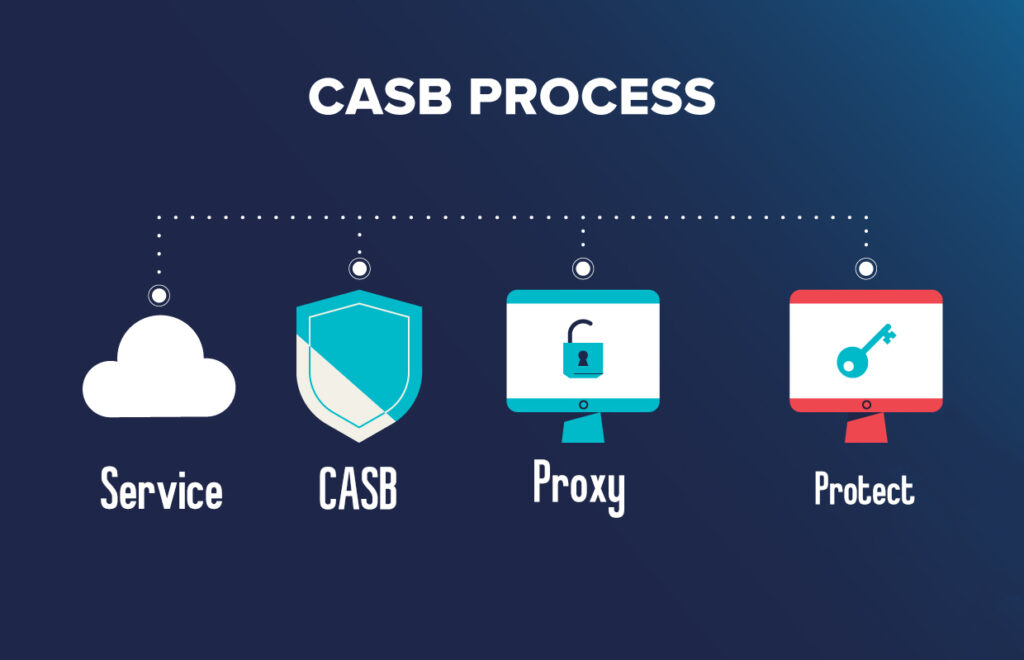
CASB is a security solution that provides comprehensive visibility, control, and data protection for cloud applications and services. It enables organizations to enforce security policies, monitor user activities, prevent data leakage, and achieve compliance within their cloud environments. CASB offers features such as encryption, data loss prevention, and user behavior analytics to ensure the security and integrity of sensitive data accessed or stored in the cloud.
CASB Strengths:
- CASB provides comprehensive visibility and control over cloud application usage, data transfers, and user activities, enabling effective security policy enforcement and data leakage prevention.
- It offers data protection measures such as encryption, data loss prevention (DLP), and access controls, ensuring the security and compliance of sensitive data within cloud environments.
- CASB seamlessly integrates with various cloud platforms, enabling consistent security policies and controls across multiple cloud services and applications.
- The solution utilizes user behavior analytics to detect anomalies, identify insider threats or compromised accounts, and facilitate proactive security measures.
- CASB helps organizations discover and gain control over shadow IT by identifying unauthorized cloud services used within the organization and mitigating associated risks.
CASB Weaknesses:
- CASB implementation can be complex, requiring careful integration with existing systems and applications, which may involve significant planning and coordination.
- CASB primarily focuses on securing cloud applications, offering limited capabilities for on-premises applications or legacy systems.
- Depending on the deployment model and configuration, CASB solutions may introduce latency or impact user experience due to added security measures.
- CASB functionality can vary based on the level of integration and APIs provided by cloud service providers, potentially limiting certain capabilities or interoperability.
- CASB solutions must continually adapt to the evolving cloud technology and threat landscape to provide effective security measures.
Zero Trust Network Access (ZTNA)
ZTNA is a security framework that redefines traditional network access by adopting a granular and dynamic approach. It prioritizes stringent authentication, access controls, and the principle of granting the least privilege to minimize vulnerabilities and thwart unauthorized access attempts. ZTNA allows secure access to applications and resources from any location, without relying on traditional VPNs, enhancing user experience, and reducing the risk of lateral movement in case of a breach.
ZTNA Strengths:
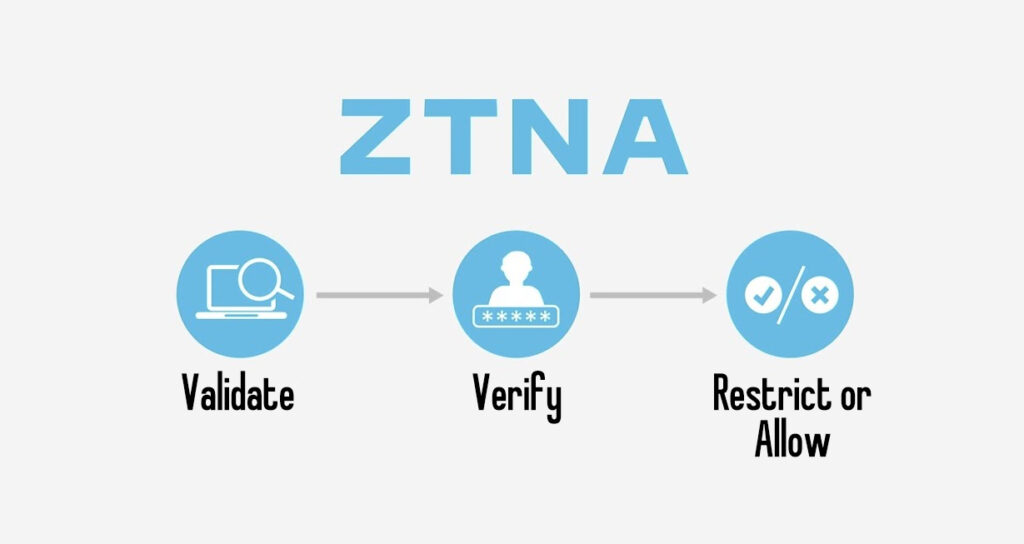
- ZTNA replaces the traditional perimeter-based security model with a granular approach, enforcing strict authentication and access controls to reduce the attack surface and prevent unauthorized access.
- It improves user experience by allowing secure access to applications and resources from any location without the need for a VPN, enhancing productivity and flexibility.
- ZTNA follows the principle of least privilege, ensuring users have access only to the resources they require, minimizing the risk of lateral movement in the event of a breach.
- The solution offers scalability and agility for secure remote access, accommodating dynamic environments and allowing organizations to scale operations seamlessly.
- ZTNA integrates with identity and access management (IAM) solutions, leveraging existing user directories and authentication mechanisms.
ZTNA Weaknesses:
- Adopting ZTNA requires a comprehensive understanding of an organization’s infrastructure, applications, and access requirements, potentially leading to significant changes in network architectures and access policies.
- Integrating ZTNA with legacy systems or applications that do not support modern authentication protocols can be complex and may require additional workarounds.
- ZTNA heavily relies on internet connectivity, making user access to critical resources vulnerable to disruptions or downtime.
- Successful adoption of ZTNA necessitates user education and organizational buy-in to understand the new access paradigm and its benefits fully.
- Implementation of ZTNA may require significant investments in terms of time, resources, and expertise.
Secure Web Gateway (SWG)
SWG is a security solution that acts as an intermediary between users and the internet. It provides URL filtering, content inspection, and malware protection to ensure safe web browsing. SWG enforces security policies to prevent access to malicious websites, filters web traffic, and offers centralized management for consistent security measures. It enhances visibility, control, and protection for organizations’ internet usage and provides secure access to cloud-based applications.
SWG Strengths:
- SWG acts as a security intermediary between users and the internet, providing URL filtering, content inspection, and malware protection, ensuring safe web browsing.
- It enforces security policies to prevent access to malicious or inappropriate websites, reducing the risk of malware infections and data breaches.
- SWG offers visibility into web traffic, user behavior, and data transfers, enabling organizations to monitor and control internet usage effectively.
- The solution can provide secure access to cloud-based applications by inspecting and filtering traffic to and from these applications.
- SWG’s centralized management simplifies security policy enforcement, making it easier for organizations to implement and maintain consistent security measures.
SWG Weaknesses:
- SWG may introduce latency due to the content inspection and filtering processes, potentially impacting user browsing experience.
- The reliance on SWG as a single point of failure necessitates high availability and redundancy measures to ensure uninterrupted internet access.
- SWG’s effectiveness heavily relies on accurate and up-to-date threat intelligence and URL categorization databases, which may require regular updates and maintenance.
- Encrypted web traffic poses a challenge for SWG, as it may limit the visibility and inspection of encrypted content, potentially allowing malicious activities to go undetected.
- SWG’s effectiveness in protecting against advanced threats, such as zero-day exploits or sophisticated malware, may vary, as attackers continually evolve their techniques.
Advanced Threat Prevention (ATP)
ATP is a security solution that leverages advanced techniques, including machine learning and behavioral analysis, to identify and mitigate complex cyber threats. It offers real-time threat intelligence, proactive defense mechanisms, and rapid incident response capabilities. ATP can identify and block zero-day exploits, polymorphic malware, and other advanced threats, contributing to enhanced security posture and threat detection capabilities for organizations.
ATP Strengths:
- ATP employs sophisticated techniques, such as machine learning, behavioral analysis, and sandboxing, to detect and prevent advanced threats that traditional security measures may miss.
- It provides real-time threat intelligence and proactive defense mechanisms, enabling organizations to stay ahead of emerging threats.
- ATP can identify and block zero-day exploits and polymorphic malware by analyzing their behavior and characteristics.
- The solution offers rapid incident response capabilities, allowing organizations to quickly mitigate and contain threats before they cause significant damage.
- ATP solutions often integrate with other security tools and platforms, enhancing overall security posture and threat detection capabilities.
ATP Weaknesses:
- ATP solutions can be resource-intensive, requiring robust hardware infrastructure and computational power to handle the analysis of large amounts of data.
- False positives and false negatives are inherent challenges in ATP, as the complexity of advanced threat detection may result in misidentifications or missed detections.
- The constant evolution of advanced threats requires regular updates and maintenance of ATP solutions to ensure their effectiveness.
- ATP solutions may have a learning curve and require expertise to configure, manage, and interpret the results accurately.
- The cost of ATP solutions and ongoing subscription fees may be prohibitive for some organizations, particularly smaller ones with limited budgets.
Conclusion
Understanding the strengths and weaknesses of cloud security solutions such as CASB, ZTNA, SWG, and ATP is crucial for organizations to make informed decisions regarding their cloud security strategies. Each solution offers unique capabilities and addresses specific security challenges. By carefully evaluating these strengths and weaknesses, organizations can select and implement the most suitable combination of technologies to protect their cloud environments, safeguard sensitive data, and mitigate evolving cyber threats.
Take the Next Step! Please call 866.421.9522 to schedule a meeting with one of our industry experts.
The post Strengths and Weaknesses of CASB, ZTNA, SWG, and ATP appeared first on USAccess.
]]>Continue reading "Protecting Cloud Data with Advanced Encryption Techniques"
The post Protecting Cloud Data with Advanced Encryption Techniques appeared first on USAccess.
]]>
In today’s digital landscape, the use of cloud computing has become prevalent for individuals and businesses alike. However, the security of cloud data remains a significant concern. Protecting sensitive information from unauthorized access and data breaches is paramount. One of the most effective ways to safeguard cloud data is through advanced encryption techniques. This article will explore the importance of cloud data protection and delve into various encryption methods that can be employed to ensure data security.
Importance of Cloud Data Protection
Cloud data protection is crucial due to the sensitive nature of the information stored in the cloud. Whether it’s personal data, financial records, or proprietary business information, unauthorized access to this data can lead to severe consequences, including identity theft, financial loss, and reputational damage. Employing robust encryption techniques adds an extra layer of security, making it significantly harder for malicious actors to compromise the data.
Understanding Encryption
Encryption is the process of converting readable data into an encoded format that can only be accessed with the correct decryption key. It ensures that even if the data falls into the wrong hands, it remains unintelligible and unusable. Encryption algorithms use complex mathematical formulas to scramble the data, rendering it meaningless without the appropriate key.
Common Encryption Techniques
3.1. Symmetric Encryption
Symmetric encryption, also known as secret key encryption, uses a single key to both encrypt and decrypt the data. The same key is shared between the sender and the recipient, making it essential to keep the key secure. Symmetric encryption is fast and efficient, but the challenge lies in securely distributing and managing the encryption key.
3.2. Asymmetric Encryption
Asymmetric encryption, or public-key encryption, utilizes a pair of keys: a public key and a private key. The public key is freely available and used for encryption, while the private key is kept secret and used for decryption. Asymmetric encryption eliminates the need to securely share a single key but is computationally more intensive.
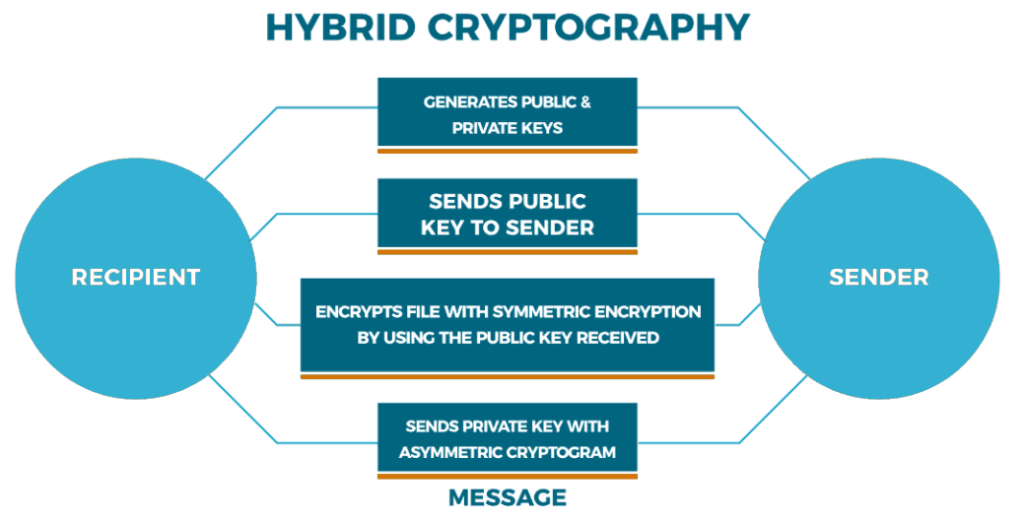
3.3. Hybrid Encryption
Hybrid encryption combines both symmetric and asymmetric encryption to leverage their respective advantages. In this approach, a symmetric key is generated for encrypting the data, and then the symmetric key itself is encrypted using the recipient’s public key. This combination ensures both speed and security.
Advanced Encryption Techniques
4.1. Homomorphic Encryption
Homomorphic encryption is a cutting-edge technique that allows computations to be performed on encrypted data without decrypting it. This unique property enables data to remain protected even during processing or analysis, making it highly valuable for cloud environments where data needs to be accessed and manipulated without exposing its contents.
4.2. Zero-Knowledge Proof
Zero-knowledge proof is a cryptographic method that enables one party to prove knowledge of specific information to another party without revealing the actual information itself. It provides a way to authenticate or verify data without sharing sensitive details. Zero-knowledge proof enhances the privacy and security of cloud data, as it allows users to prove their credentials or access rights without disclosing the underlying information.
4.3. Quantum Encryption
Quantum encryption leverages the principles of quantum mechanics to provide unbreakable encryption. It utilizes the unique properties of quantum particles to encode and transmit data securely. Quantum encryption offers robust protection against sophisticated attacks, including those leveraging quantum computing. Although still in its early stages, quantum encryption shows great promise for securing cloud data in the future.
Implementing Encryption in Cloud Environments
5.1. Encryption at Rest
Encryption at rest focuses on protecting data while it is stored in the cloud. When data is not actively being accessed, it should remain encrypted to prevent unauthorized access. This can be achieved by encrypting the entire storage system or specific files and databases.
5.2. Encryption in Transit
Encryption in transit ensures that data remains secure while being transmitted between the user’s device and the cloud server. This is commonly achieved using protocols like SSL/TLS, which encrypt data during transmission, making it unreadable to eavesdroppers or attackers.
5.3. Key Management
Proper key management is vital for effective encryption in cloud environments. It involves securely generating, storing, distributing, and revoking encryption keys. Robust key management practices include using strong encryption algorithms, regularly rotating keys, and implementing access controls to prevent unauthorized key access.
Challenges and Considerations
Implementing advanced encryption techniques in cloud environments comes with challenges. These include the computational overhead of certain encryption methods, the complexity of key management, and compatibility with existing cloud infrastructure. It is crucial to evaluate these factors and select encryption solutions that strike the right balance between security and performance.
Benefits of Advanced Encryption
Employing advanced encryption techniques for cloud data protection offers several benefits. It safeguards sensitive information from unauthorized access, reduces the risk of data breaches, and helps organizations comply with regulatory requirements. Encryption also enhances trust and confidence in cloud services, enabling businesses and individuals to leverage the benefits of the cloud without compromising security.
Conclusion
Protecting cloud data with advanced encryption techniques is essential to ensure the confidentiality, integrity, and availability of sensitive information. By understanding encryption methods, such as symmetric, asymmetric, and hybrid, as well as advanced techniques like homomorphic encryption, zero-knowledge proof, and quantum encryption, organizations can implement robust security measures. Encryption at rest, encryption in transit, and proper key management play vital roles in securing data within cloud environments. Despite the challenges, the benefits of advanced encryption are undeniable, providing peace of mind and maintaining the privacy of cloud-stored information. Take the Next Step! Please call 866.421.9522 to schedule a meeting with one of our industry experts.
The post Protecting Cloud Data with Advanced Encryption Techniques appeared first on USAccess.
]]>